AC Coupling functionality of Riello Solartech hybrid photovoltaic inverters: innovation in energy storage for photovoltaic systems
In today's industrial and commercial landscape, energy efficiency has become a key factor in maintaining competitiveness.
Rising energy costs and the growing focus on environmental sustainability are driving businesses to maximize the self-consumption of the energy generated by their photovoltaic systems.
In this context, Riello Solartech introduces AC Coupling technology, a solution that enables the integration of battery energy storage systems into both existing photovoltaic installations and new projects. Compatible with any inverter, including those from other manufacturers, this technology optimizes energy management and increases the return on investment.
What is AC Coupling?
AC Coupling is a system configuration that enables the integration of a battery energy storage system into an existing photovoltaic installation without modifying the existing infrastructure. This technology allows battery storage to be added by installing single-phase or three-phase hybrid inverters on the AC side of the system, operating seamlessly alongside the existing string inverters.
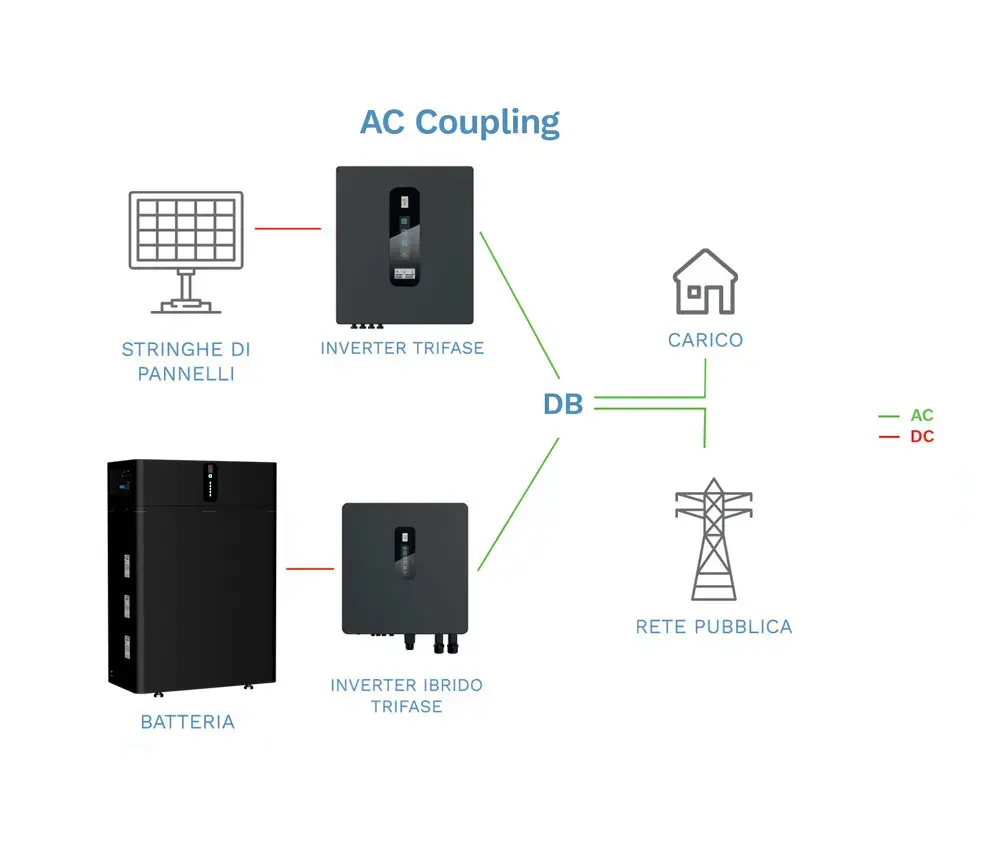
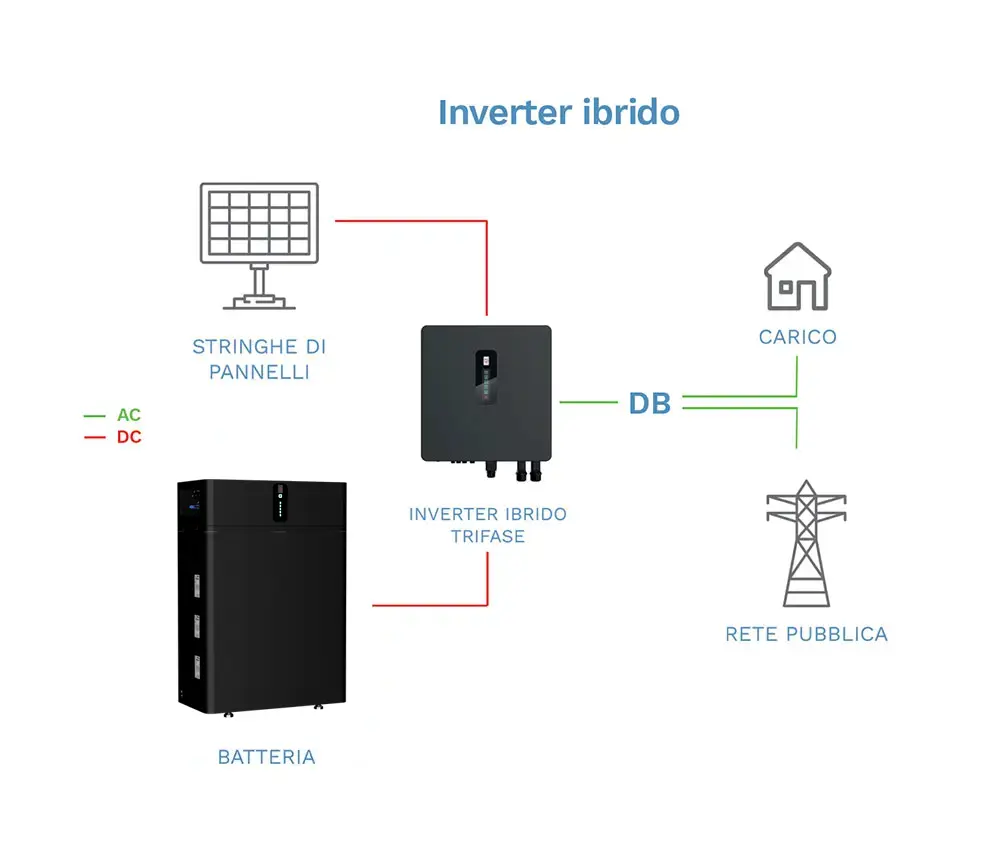
Classic hybrid inverter operating diagram.
How does it work in detail? More energy for you, lower electricity bills.
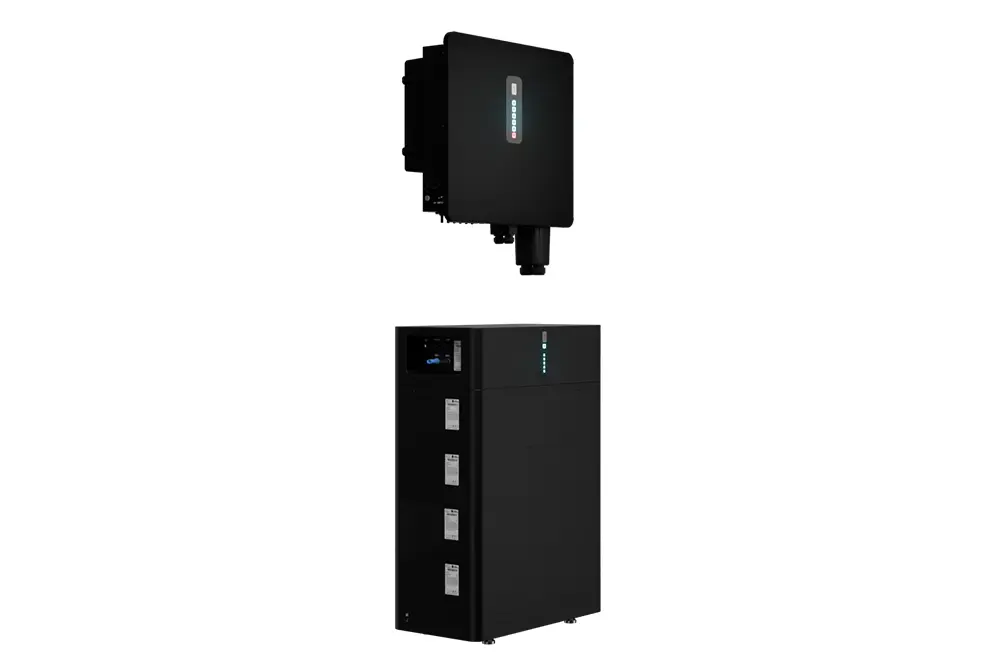
- Hybrid inverters with AC Coupling functionality manage the battery energy storage system and are mainly used in existing photovoltaic installations, allowing the current PV system configuration to remain unchanged.
- This functionality allows our RS Hybrid Three-Phase and RS Hybrid Single-Phase inverters to monitor photovoltaic production through a meter connected to their RS485-1 or RS485-2 ports. This differs from the standard hybrid mode, where energy production is measured directly through the MPPT inputs connected to the PV strings.
- The hybrid inverters used for the storage system and the string inverters of the photovoltaic system are therefore separate devices, with the storage system power adding to the photovoltaic generation power.
- Parallel installation: Riello Solartech hybrid inverters are installed in parallel with the string inverters already present in the system (including third-party brands). This configuration does not require any modifications to the DC section, preserving the integrity of the original installation.
- Excess energy storage: during periods of high solar production, any energy not immediately consumed is used to charge the batteries connected to the hybrid inverter.
- Use of stored energy: during periods of lower solar production or peak consumption demand, the energy stored in the batteries is released to power the loads, reducing electricity grid consumption and optimizing self-consumption.
Request your personalized quote today, with no obligation!
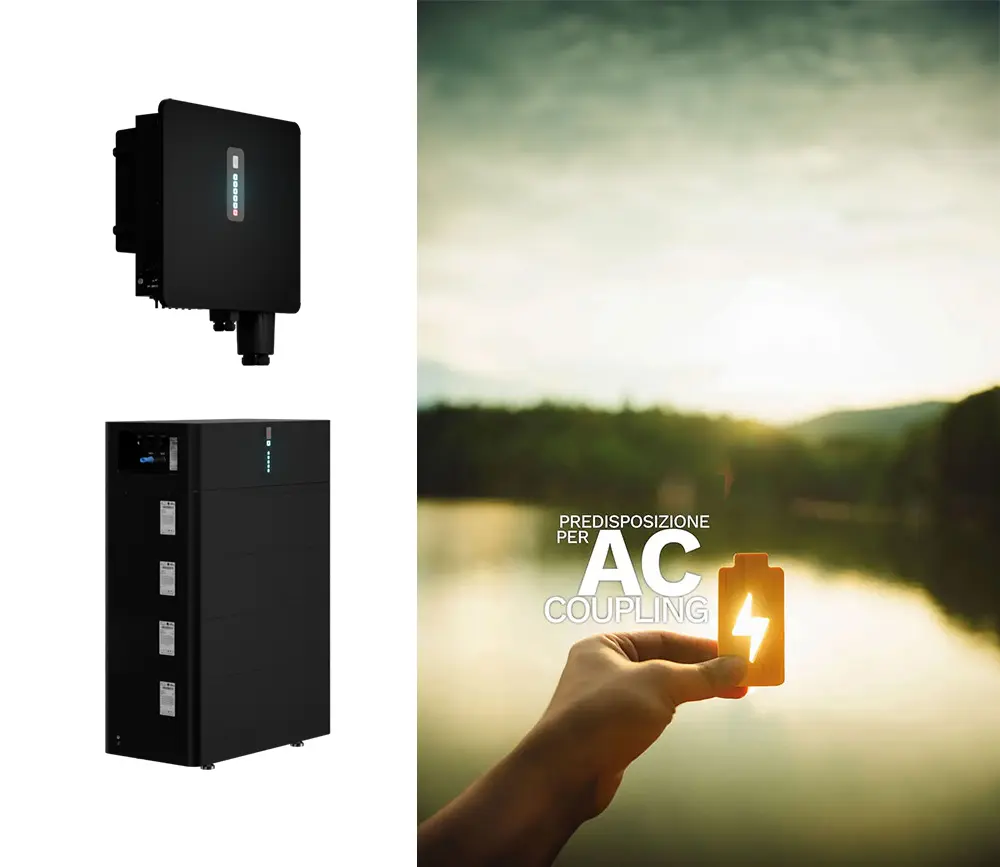
Benefits of AC Coupling
For existing photovoltaic systems
- Simple and non-invasive integration: AC Coupling allows the addition of an energy storage system without replacing or modifying the existing string inverters, preserving the initial investment.
- Increased self-consumption: the excess energy produced during daylight hours is stored in batteries and used when solar production is insufficient, reducing dependence on the electricity grid.
- Energy cost optimization: using stored energy during periods of peak electricity prices enables companies to achieve significant savings on operating costs.
- Operational flexibility: the ability to manage stored energy allows companies to better adapt to energy price fluctuations and operational requirements, improving cost planning and forecasting.
For new photovoltaic systems
- Maximized efficiency: the combination of hybrid inverters and energy storage systems from the design phase ensures optimal management of the energy produced, increasing the overall efficiency of the installation.
- System scalability: photovoltaic systems with inverters using AC Coupling technology can be sized and expanded according to the company's specific energy requirements, providing a modular solution that can adapt over time.
- Operational continuity and resilience: stored energy can act as a backup power source during grid outages, ensuring the continuity of critical operations and protecting the company from production losses.
- Environmental sustainability: the integration of energy storage systems contributes to greater energy independence and a reduction in carbon footprint, enhancing the company's image and meeting growing expectations in terms of environmental responsibility.
Specific use cases
Home with an existing photovoltaic system
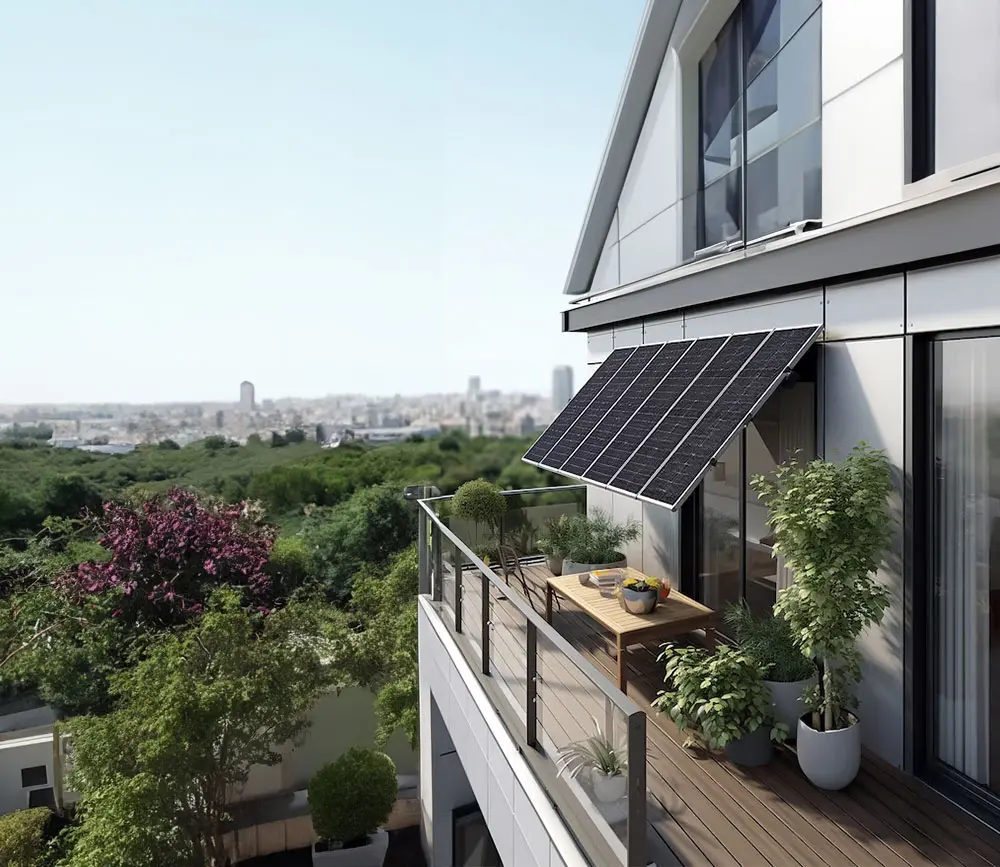
Scenario: a family installed a photovoltaic system on their home several years ago to reduce energy costs by powering various electrical and electronic devices, as well as running appliances such as refrigerators and heating systems. However, most solar energy is produced during the day, while the main energy consumption occurs in the late afternoon and evening, when solar production is no longer available or significantly reduced.
Challenge: excess energy produced during the day is fed back into the grid, while in the evening the family needs to purchase electricity from the grid. This limits the effectiveness of the photovoltaic system in terms of savings and energy independence.
Solution: installation of a hybrid inverter with AC Coupling. The RS Hybrid Single-Phase inverter, combined with low-voltage isolated batteries (51.2 Vdc) for maximum residential safety, was added in parallel to the existing single-phase string inverter, without requiring significant modifications to the original system.
The excess energy is now stored in the batteries during daylight hours thanks to AC Coupling technology. When the sun goes down or solar production decreases, the hybrid inverter and batteries supply energy to power the home's devices.
Benefits achieved
✔ 24/7 energy efficiency: thanks to the storage system, solar energy is no longer wasted but intelligently used throughout the day.
✔ The family no longer faces high electricity bills. Solar energy is free and does not generate additional costs. Household devices can be powered directly by solar energy during the day, while the hybrid inverter with AC Coupling supplies the home at night using the energy stored in the batteries.
✔ No risks related to voltage fluctuations or incompatibility issues caused by additional batteries. AC Coupling functionality is included in all our hybrid inverters. Over time, users can expand their photovoltaic system by adding solar panels according to their future energy needs.
Final result: thanks to the integration of the storage system with AC Coupling technology, the family achieved a significant improvement in home energy management. Solar energy can now be used even during the evening and night, reducing dependence on the electricity grid.
For the family, these benefits translate into greater safety, comfort, and financial peace of mind, with a constant energy supply for essential appliances such as refrigerators, lighting, and heating or cooling systems. All this is achieved without invasive modifications to the existing photovoltaic system, ensuring an investment that can be recovered easily and quickly over time.
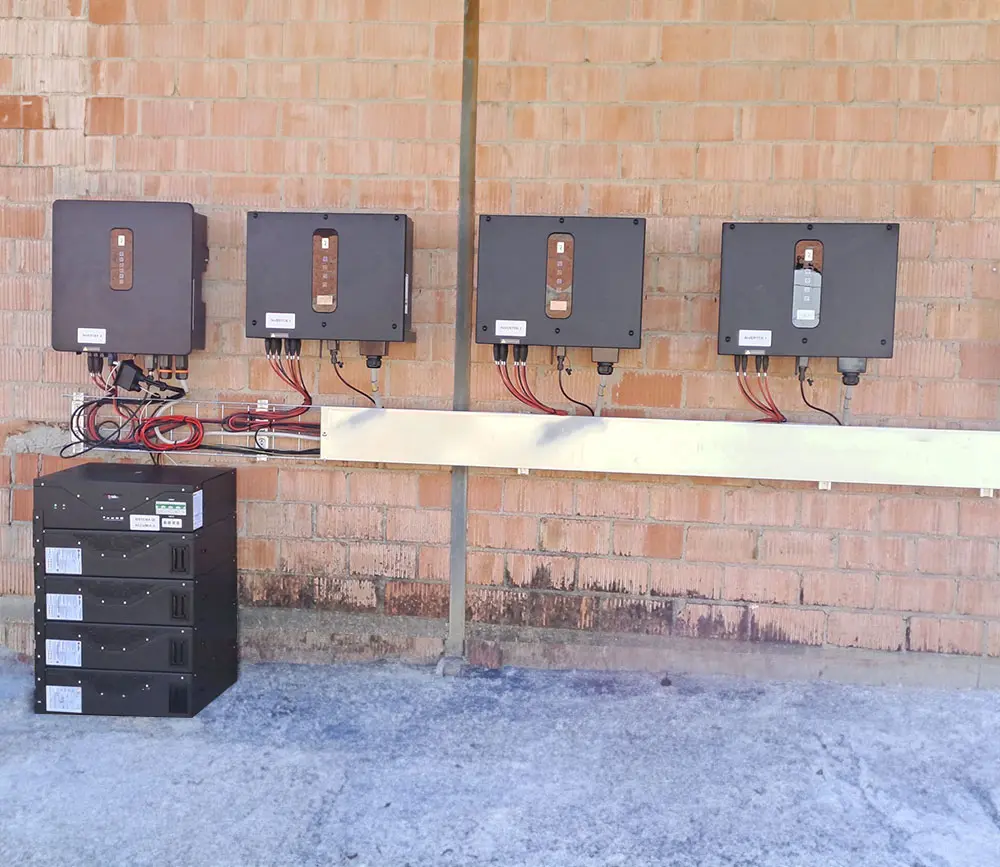
Agricultural company with photovoltaic system and energy storage
Scenario: a company with high energy consumption wanted to optimize the efficiency of its photovoltaic system and reduce dependence on the grid. Daily solar production was high, but part of the generated energy was not directly consumed, resulting in wasted energy or energy fed back into the grid at unfavorable rates.
Challenge: the company aimed to increase the self-consumption of the solar energy produced and reduce operating costs while ensuring greater energy independence.
Solution:
- 100 kWp total photovoltaic system for optimized renewable energy production.
- Energy storage system with a total capacity of 21.2 kWh using AC Coupling technology, consisting of 4 Riello Solartech battery modules of 5.3 kWh each, installed in parallel without modifying the existing inverter.
- 1 10 kWp RS Hybrid Three-Phase inverter coupled with 3 30 kWp RS Three-Phase Riello Solartech inverters.
- Solar energy maximization: thanks to the ability to store the energy produced during the day and use it during evening hours or peak consumption periods.
Benefits achieved:
✔ Increased self-consumption: solar energy is used more efficiently, reducing the need to purchase electricity from the grid.
✔ Reduced energy costs: lower electricity consumption from the grid results in reduced energy bills.
✔ Greater energy independence: the company is less exposed to energy price increases and market fluctuations.
✔ Sustainability: reduced emissions and greater use of clean, renewable energy.
Installation completed in Loria (TV), Italy
Thanks to AC Coupling technology, this company has improved its energy efficiency without invasive modifications, optimizing its photovoltaic investment and making it even more cost-effective.
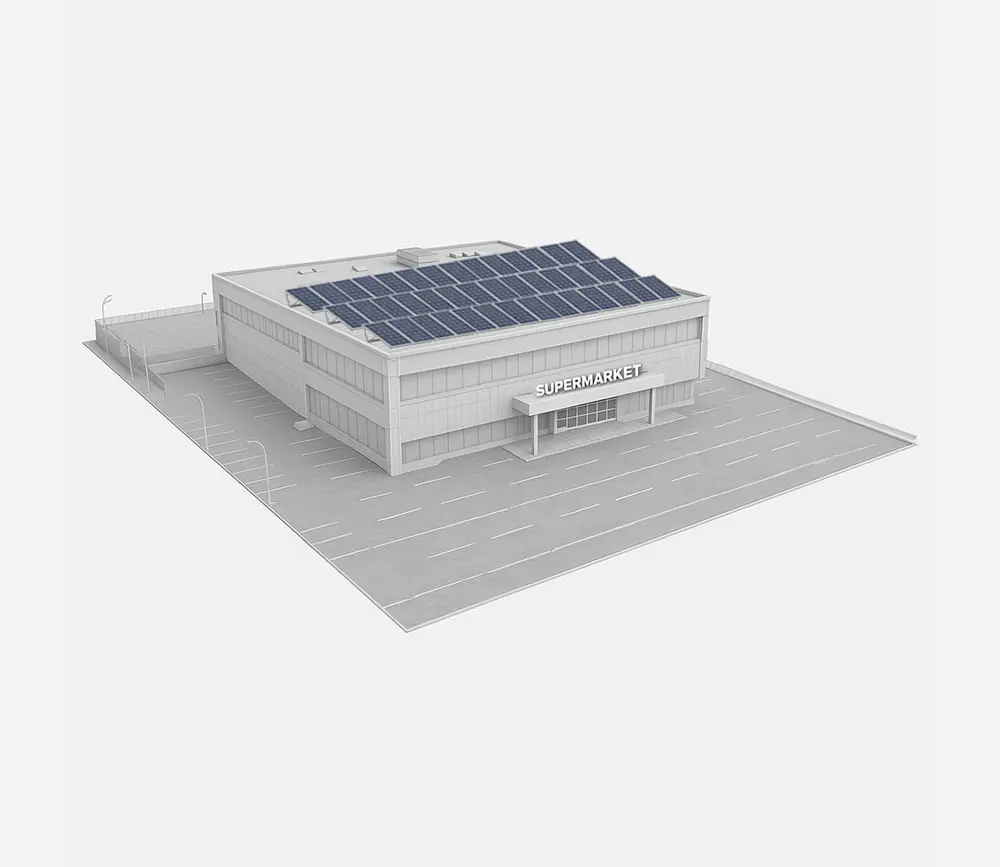
Supermarket with an existing photovoltaic system
Scenario: a medium-sized supermarket installed a photovoltaic system several years ago to reduce energy costs. However, most solar energy is produced during daylight hours, while consumption peaks occur in the early morning — when lights and ovens are switched on to prepare fresh products; during the busiest hours, due to the intensive use of checkout systems and air conditioning; and during evening closing hours, when cleaning and sanitization cycles start, along with more intensive refrigeration activities to restore operating temperatures.
Challenge: excess energy produced during the day is fed into the grid at unfavorable rates, while during peak consumption periods or when photovoltaic production is lower, the supermarket must purchase electricity from the grid at higher costs.
Solution:
- Installation of an RS Hybrid Three-Phase inverter: the inverter was added in parallel on the AC side of the existing string inverters, without requiring modifications to the original photovoltaic system.
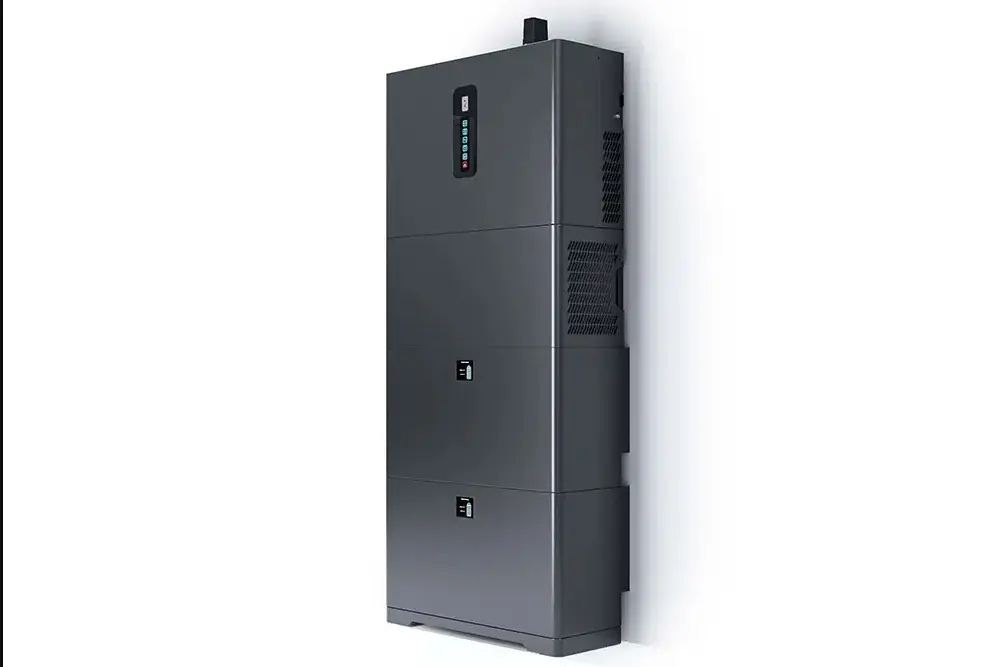
- Integration of a battery energy storage system: RS BATLIO 5300T LiFePO4 batteries with a total capacity of 31.8 kWh were integrated into the system, allowing excess energy produced during the day to be stored and used during evening hours or peak demand periods when electricity costs are higher.
Benefits achieved:
✔ Self-consumption optimization: solar energy produced during the day is stored and used in the evening to power high-demand equipment, such as refrigeration systems and lighting, reducing dependence on the grid.
✔ Reduced energy costs: the supermarket reduced electricity purchases from the grid, especially during peak hours, achieving significant savings on energy bills. Overall energy costs were estimated to have decreased by 45%.
✔ Greater energy independence: thanks to the storage system, the supermarket became less vulnerable to energy price fluctuations and increased its operational resilience.
✔ Sustainability: the use of stored solar energy further reduces the environmental footprint of the business, contributing to a more sustainable use of energy resources.
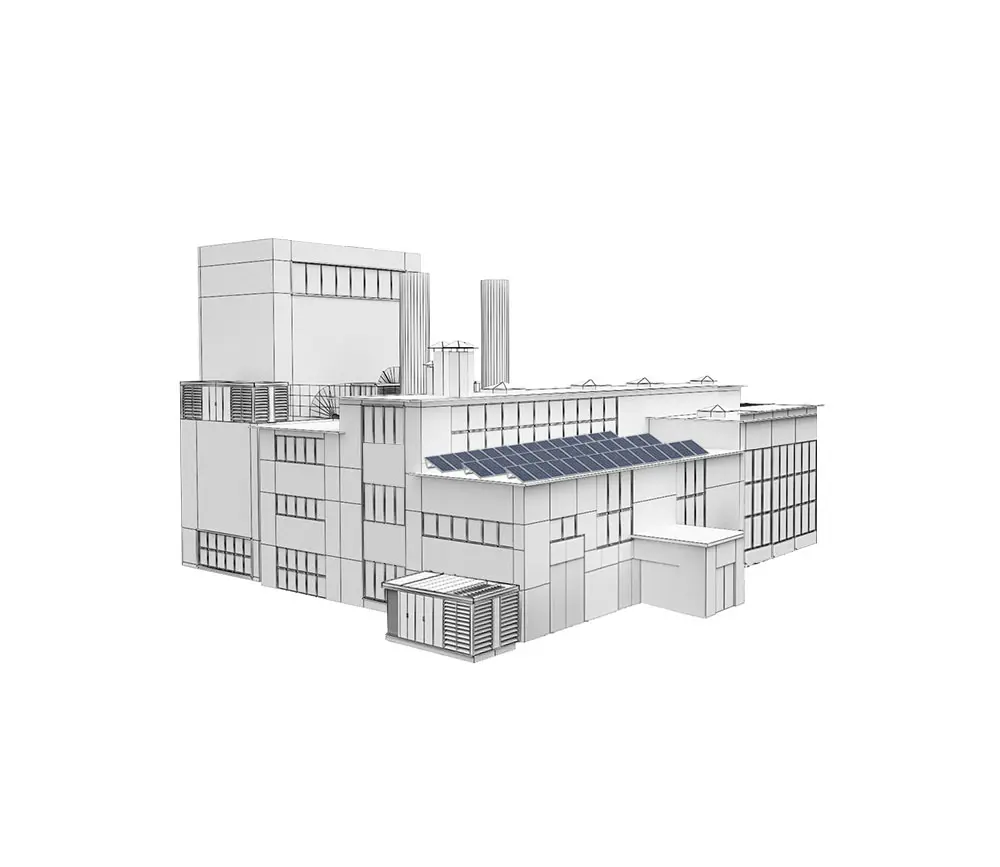
Industrial facility with photovoltaic system
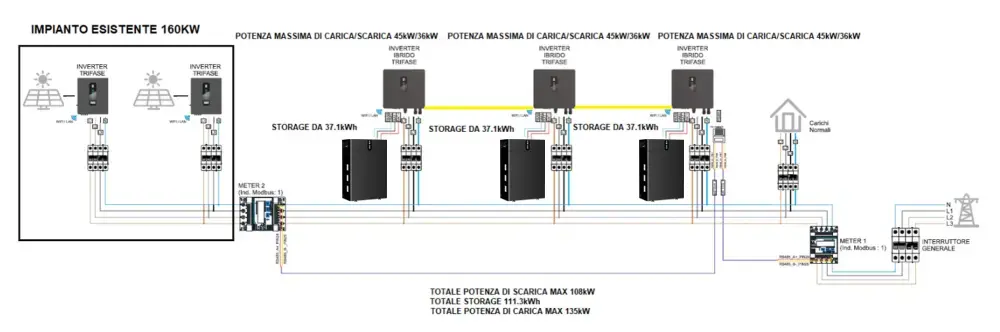
Scenario: a medium-sized metalworking company installed a 160 kWp photovoltaic system several years ago to reduce energy consumption from the grid and optimize operating costs. The company's energy demand is high, with heavy machinery and production lines operating continuously for many hours a day, including night shifts. Without an energy storage system, photovoltaic production reaches its peak during daylight hours, while consumption peaks may occur at different times.
Challenge: optimize the economic efficiency and energy independence of the production site.
Solution:
- Existing 160 kWp PV system, covering 55% of the user's energy load demand.
- Installation of 3 new 30 kW RS Hybrid Three-Phase inverters with AC Coupling, adding a total of 90 kWp: the system was integrated without modifying the existing string inverters, ensuring compatibility with the pre-existing installation. Only the installation of an energy meter was required.
- Battery storage system: the use of 37.1 kWh Lithium Iron Phosphate (LiFePO4) batteries allows excess energy produced during the day to be stored and used during periods of higher demand and during night shifts, covering approximately 30% of the daily energy requirement.
- Intelligent energy management: the RS Hybrid Three-Phase inverter BMS (Battery Management System) optimizes battery charging and discharging cycles, reducing electricity drawn from the grid during peak demand periods.
Benefits achieved
✔ Energy savings: reduction of energy costs by 80% for powering industrial machinery, HVAC systems, and lighting.
✔ Grid independence: the company was able to cover 90% of its annual energy needs using solar energy.
✔ Peak Shaving: the battery system reduces energy demand peaks, lowering costs associated with exceeding contracted power limits and optimizing energy tariffs.
✔ Improved return on investment (ROI): thanks to AC Coupling, the integration of energy storage into existing photovoltaic systems is possible without invasive interventions, with an average payback period of just a few years.
✔ Sustainability and environmental certifications: reduced CO₂ emissions support the achievement of ISO 50001 certifications, improve ESG ratings, and enable access to incentives for energy transition projects.
AC Coupling therefore represents the ideal solution for industries aiming to maximize self-consumption, reduce operating costs, and improve energy sustainability without modifying their existing infrastructure.